Tuesday, June 09, 2009

Can't see properly ?


I have a migraine now. My vision has gone all spangly and I cannot see that well. It is not good. I can be sick too with numb arm and messed up speech - like a mini stroke in this situation but this isn't as bad as when I was a teenager.
What if I was out and about and some delightful youth wants to cause a confrontation ? Goodness what nightmare.

What isn't addressed by self-defence literature is what to do if you cannot see properly and need to defend yourself. I wear glasses and if these get knocked off, then with my minus 9 vision I am looking at burrs. With migraine vision I am have blind sports.

Crazy moneky guard would be a good fail-safe here, as you don't have to be that active in your defense - no searching for bridges or interacting on a high reflex demanding defence like a pak sau.. To be honest you may not see it coming with a migraine. You would have to feel the attacker if you could not see them. Here grappling chi sau (for want of a better word), would be of value in searching for that bridge if you want to make contact.

I have tried sparring with no contact lenses in. I did get hit more but it wasn't that bad. If the light was failing that would be worse. At night I could not run as yo wont see where your feet are being placed too easily. With no glasses imagine loosing your keys to your car ! I have a spare pair of glasses in the car thankfully - its required by law in some states.

Monday, May 18, 2009

Learning forms

I am learning a form at the moment. To do this needs a special form of concentration, slow repetition, frustration and imagination.
I am getting the core of the form of a DVD and this is a good medium vs VHS. The DVD player has A:B Repeat function and this allows you to segment the sections. My method is to plough through these segments and not dare move on until you 'get' the shape your on.

Once you 'have' that segment you go back to the start and re-stack the units so far. This needs discipline as you want to race ahead and get it over and done with. You may have to turn the sound down or off, as the repetition of phrases can be unbearable BUT on the other hand the ideas are being vocalised too and if you are an 'auditory' learner, then you may pick up these commands and make them meaningful.

To make the shapes stick in my memory I develop silly names / ideas and thread these together like a mini-story. The form I am focusing on has these 2 circular hand shapes at the start. I told myself they look like the 'Mr.Man' character Mr. Dizzy.

It is worth seeing the form 'done properly' by different people so you can see what is the margin of difference in expressing the shapes. In this DVD there is an elbow strike that hits an arm with a slap in one expression, or slides along it in another. Sometimes that hand is up like a prayer hand, sometimes it is flush to the forearm. A few years ago this difference would have phased me. "It must be one or the other or its all wrong", I would have thought. But forms are seldom like that totally. Its the idea/s in there that they signify that count more. I know this from the Wing Chun forms, their deviant expressions and simialrity. If you learn to look then you learn to see. I.E. Wood through the trees. The big idea can be expressed in varying ways.

Breathing is meant to me mapped on to the in and outward moves - or ying and yang type moves. This is hard. I find it hard to belive that the practitioner in the DVD gets a full breath in sync. with his moves. Only way I can get close is to go very S-l-o-w like tai chi nearly. It may pick up when I can swithc of my brain and do the moves with out thinking.

I know there is a debate out there about forms and why bother etc. etc. this isn't the place to go over this. But I would rather know them then not and realise they are the basis of teaching / learning and keeping the inventory of moves and ideas in your face. Without the forms you may regress into technique collecting. I think JKD could be accused of this.

Josh Waitzkin in his book 'The Art of Learning', however, does say it is possible to become a form collector in its own right. To avoid that you need to know the applications too. I have to go over the applications and the form again to keep it in mind, to avoid just doing funny shapes. I know from studying the Wing Chun forms that the applications are myrriad from the same moves. They can be literal or very abstract. The DVD only scratches the surface with applications, the man says so too You will have to use your imagination to eek out the meainings of this. One way to do this is by analogy.

Here is a link to someone useing imagination to the application to the same shape:

http://www.youtube.com/watch?v=AdQlQ2w-McQ&feature=channel_page

Another way to mix things is to do the form in differnt ways. Hard like uber-Karate. Soft like Tai Chi. Mixed mode etc. This could benefit you in different ways, breathing, reflex etc. This form I cannot do very fast and I am in slow mode for now. The DVD has the masters student doing it in 4 angles, fast too. This is useful.


Sunday, May 10, 2009

A dummy on the dummy

Nice animation here. I bet its based on a real actor / real modeling of a Wing Chun practitioner, as there are breaks in the footwork pivots. (Doesn't matter).
Good angle chosen to capture depth.

If you didn't go pigeon toes does it matter, so long as you fuse your spine base and pelvis ?

Friday, April 17, 2009

Stop Smoking the Bong Sau

This video is from Bulshido.net
These people could be seen as 'rationalists' in the sense they seek to expose the mysticism in the martial arts : death touches, deadly screams and other mystical claims by equally mystical gurus.

Here they have a video of Wing Chun. They make fun of it. The message of this site is to test the claims made by the arts and not take it on faith. I can see why Wing Chun is fair game for this, as the culture around it does prompt some mystical attributes. The tradition and lineage worship isn't helpful. The search for the 'pure' and true lineage keeps away any conflicting evidence that may arise.

One interesting comment in the text to this video was the idea that there are diminishing returns from studying traditional MA. The more you do the less you get out of it hour for hour. You become so good your trained to be 'bad', as you become 'stylized'. I.e. Sculpted into inflexable and inappropriate responses.

Sunday, April 05, 2009

Vietnam Wingchun Nei-gia Kuyen. (Look for Human Dummy @1.20)

Wow - look at this at about 1.20 into the video. They have a human dummy to assist the demonstration of the form. How novel.

The shapes in this variant look like 5 animal system.

Sunday, March 29, 2009

Form and function squashes the debate

Look at the Wing Chun wooden dummy. Really stare at it.

Look at the length of the arms. Look at that leg. See how short they are from the body of the dummy.

'That' short, means it's a short range system and most of the moves, (not all), in the 108 reflect that you will be in this short range. (Only the kicks on the flank are where disengagements in that space occur - but you come back in).

So what ? The forms leading up to this 108 set are now being deployed with more footwork. You are in a showcase now of what fighting may look like, to a degree, in this optimized set of skills. When you specialize you leave things behind. This system has voluntarily left behind the long range kicks - it hasn't got any. This means it doesn't want you to get into a long distance game. No kick-fencing. It does give you tools to smother long low kicks, however. It does know 'others' do things that way.

Also in the form there are no long range punches. The arms partly influence this. They are so short, you have to do a calculated shuffle if you want that in. Look at the Choy Le Fut dummy. See how long the arms are on that - the central movable one. That is designed that way, as CLF, as long range aspirations in it. Design means intent - or at least it used to in the Middle Ages.

All this tells you of the design assumptions in Wing Chun's aims and optimizations. It has a small content because it only specializes in a limited range. THAT is its specialty. IT didn't claim to do anything else if you ask me. (assuming we have the perfect knowledge set of 'Wing Chun'), then it is a deliberately limited art to get you up and running. THAT story of Beautiful Spring time is to reinforce that point. SHE had a short term goal that needed seeing to. To 'sort out a bully', in a short time frame. Things had to be excluded.

The 108 repeats and drills many shapes and explores different scenarios of a 'small' array of moves in a short space.

Carrying on from this I would not even bother getting dragged into 'is Wing Chun good for sparring with'. No, it isn't as that uses space tactically - back and forth - and kick boxer / boxers have different appreciation of that space in sparring.

In its optimised space - if you can get the other person in that zone - that is what Wing Chun is for. Wing Chun is good at what Wing Chun specializes in. Pull it out of the ideal shape and its less useful. That is why I would not get pulling into, a verbal debate in the same way. That too, is out of range, by design. If you bring Wing Chun into different terrains with claims for it, then its a pain. You have to show how you can fight with others in different ranges in your ideal structure, (that makes it Wing Chun still and not become de facto kick boxing). Or you have to cite others who can - and this leaves you in a virtual world of possibilities not your own experiences. So don't bother. That argument is out of range too. Stay away from that and 'stick' to the aims and claims of 'the design'. That dummy is the design.

Short aims. Short arms. Limited content.

Wednesday, March 11, 2009

Will the real Robin stand-up


I have to defend the honor of the wooden dummy sometimes from non-believers and this needs Super Hero like skills.

This is in fact the Robin that came to aid me in the previous post and gave me magic powers. The picture is of the Boy Wonder doing Gum Sau, and that is a roof top dummy on the edge of the picture.

The Robin was correcting my Bong Sau - or wing arm technique.

Bong sau is good if your hands are low by your sides, say you are carrying shopping. None of the Wing Chun literature tells you that. They assume bong sau is from stance. We are not in stance in everyday life. When we are suprised we have no defensive / offensive structure. So we need to think about that one. Upright stance IS our structure when surprised - or is it a lean back - becuase we are shocked ?

Boxers have a version of bong sau when they drop the lead arm and hide behind their shoulder. I think Fillsack on youtube does it in some boxing sparring he shows. This is a conscious effort to drop the lead arm, that was up in the first place, into that shape.

Wrestlers have their bong sau to get rid of a one armed grab around the neck, in a shrug like motion. I have once done it then after than never did it again in sparring.

Bull fighters have a bong sau like action with their cape BUT their footwork is the real deal as it angles off in a box-step / spiral. This type of step-off to the side and slightly forward can be seen in Master Wong's 116 video - which I have below somewhere. It comes early on, and is followed by a dumog-like action / lap sau. That is some good footwork for that form and its not in Yip Man's version.

The 'A' frame in grappling 'in guard' is a supported bong sau. Bong sau is in Kali when you block a straight thrust with your stick - again matador.

On the dummy Bong sau can be sticky with a diagonal forward motion, that crushes the opponents structure. OR it can be ballistic and you can bounce off them. You can have inner-gate bong sau - the first section of the dummy has this and you repeat it often. Its to correct a mistake and you get to the outside gate with your step circle slide footwork as you tan sau.

Here are 2 pictures from http://www.kifightingconcepts.com/IKF_6-2005.htm


Here is an outer-gate 'wing arm'. That leads to 'the-very- hard-to-do-in-a- struggle', lap sau. Nice finesse here actually that the lap sau is on the same arm, that has been bumped right by the bong sau.

Monday, March 09, 2009

Hands make the way - but not on the dummy

Did some drills today for aiding sweeps in Silat. Si-gung Sackvill showed me them in the garage academy. I put gusto into drilling them slowly, as if it was 2004 again and I was going over my dummy form and the sacred 108.

Anyway, what I wanted to day today was get the dummy involved into the Silat swing of things and do the sapu on that. You can't on the dummy with all the pieces are plugged in. Hands make the way for you to impale yourself.

So you have to take out the leg, and the central arm and one of the top arms. This leaves on arm left pointing on the triangle 'V'. You have to imagine you have made the way and left the path free now (no hardship) and then you can 'uproot' and have a flush - or near - flush torso to the dummy body and push that away on a 'T'.

I used the 'T' there as the 'I' part of the 'T' is me coming in and the cross-part is the force for the opposite lever for the top half. Next comes the foot which needs some imagination or an air sweep the other way 'L'.

My dummy is in a trough, so the thing can rock forward that helps too.

I hope this is all worth it and I have not got a fundamental flaw in here.

Sunday, February 15, 2009

Getting a Wing Chun Wooden Dummy - was it worth it ? 5 years on.

Hi people,

I got my Wing Chun dummy 5 years ago in winter of 2003. As I had written earlier on this blog, I had coveted the dummy for about 9 months before paying for one. It is a fair amount of money and I had to do some research into which one to get, what type and even should I get one.

Overall I would say yes. I am glad I got the dummy. The deep indulgence of learning the 108 moves and the research around that were exhilarating. The effort needed to go through the moves, cross-check and adapt and verify were quite time consuming. I had to make adaptions to my knowledge. When I went to Australia I had come back with some new Wing Chun knowledge that added finesses to what I had learned. 'Chasing the arm' was something that reinforced the need for forward focus - e.g in tan sau make sure you don't use it as a wax on wax off block when sparring when scared.

The searching for video knowledge was useful. Seeing the diverse uses of the dummy were interesting. Jospeh Simonet and Randy Williams are two good diverse starting points. The JKD literature on the dummy isn't as good as I felt it should be. Although Lucay Lucay does use sticks on his dummy.

Also there have been moments of doubt when using the dummy. A learned friend - in sync. in the spirit of 'aliveness' from Matt Thornton, had said the dummy was not a good tool and to forget it. This is because trapping doesn't work.

This was in 2004. Already there was an emergence of a different way of thinking in martial arts and the dummy was not part of that. This put much dissonance in my mind. Why spend time doing forms on it if they are not of value. Bruce Lee said this, but he still has his sets on the Wooden Man. This is the argument on the next level.

After some thought and training in garage with friends I can say that the dummy is of obvious value when there is stiff arm energy. When there is a constant pushing type force for you to feed off. When there isn't don't expect to have much dummy knowledge flow in to be of value off you. I think, that it is worth training the dummy in a non-stick ballistic way then too.

The number of dummies on the market has increased - and designs have diversified. E.g. you get half dummies on sale now.

I use my dummy outside and if I costed out the time I have used it in 5 years then it is value for money as I really do use it. I think there are untapped uses for the dummy out there - for MMA type drills that would work, for example plum Thai head hold can be mimicked and escape too. (Maybe I do a video).
Silat uses of the dummy are out there but rare. Only seen one Silat dummy video on YouTube (which is linked below in a previous post). Simonet has handshapes that are Silat like in his form.

These days I split up my form into mini drills. I rarely do the whole form. The reason why is the upright stance needed for it isn't that useful I find and in sparring my chin must not come up. A couple of times I have hooked punched and my chin surfaces to get countered. The tension between tradition and practicality does rankle with me sometimes. But its my journey and my body. I am responsible for my training and evaluating what is best for me. The (traditional) form can't dictate what I can and can't do.

Of all moves on the dummy probably pak sau - slap hand - is the one that comes out in sparring the most. Bong sau very rarely sees the practical light of day - beyond weapons. Tan sau is of use and getting it pushing into the body of the dummy is good practise. Double garn sau does have some uses I have found out in its 'jaws' you can catch a committed stab energy.

When I was doing the research in 2003 for the dummy the arguments against classical and traditional training were only angry rants on forums. I didn't know they were a real issue - due to BJJ and Cage fighting. Now if I had been exposed to this argment and the people I now know and share with I wonder if I still would buy a dummy now. Mmmm. The people around me would not be sympathetic to it. That may infleunce me. Its my like of Wing Chun that goes back to 1988/9 that put the seed in my head. The symbolism of the dummy is quite strong. The VHS instructionals were like £30 or £50 in the 80s. And the wooden dummy was seen as one of the last hurdles in the journey. I think this has an issue in sympathising with it. It makes you desire it as you are getting closer to the unobtainable goal. I just jumped in later unoffically and untraditionally, as we can these days, with no apprentiships.

Dummies don't hit back. This is true. Learning not to flinch and turn the head can only come from human interaction in training. This could not be obtained from dummy training.


Friday, January 09, 2009

Robin

I was training today on the dummy. It was frosty but the ground was nice and hard. Not like Somme 1916. When I train sometimes a robin comes and watches me. The robin is a small bird with red chest. It is very brave. I think it thinks I will churn up the ground for worms with my dummy being some strange machine.

Something odd today, however. The robin came within inches of me and would not go away. Its really trying to say something you sense. I waited for it to go a distance away and got some bread and threw it in another direction so I could carry on training, I wonder if the clacking of the dummy actives the worms that the robin wants ?

Cheep cheep.

Sunday, December 07, 2008

Silat Jurus vs Wing Chun Forms

Yo !

I am going through some basic juru training in Silat. As I have some knowledge of Wing Chun forms, (including different lineages versions), I wanted to do a mini-comparison.

From a beginners perspective when you examine Juru 1 and Sil Lum Tao as entry level forms the differences are interesting. Silat has more double hand movements in it. Wing Chun has some double hand movements initially for the generic salutation, then focuses generally on single hand movements.

In Juru 1 there is this underarm slide that looks like the underarm slide in Biu Gee. This is interesting indeed. The application I was shown is very simialr to Wing Chun's. But the gap in being shown these in your Wing Chun 'career' vs the Silat novice is measured in years.

I wonder if the concepts gained in Silat are more mature / faster than those in Wing Chun (as expressed in modern teaching of Wing Chun ?!). Would a Silat player come out with more concepts than a Wing Chun player in a similar timeframe ? 2 hands go into battle early on plus you get footwork and lower level training introduced.

I always thought Silat and Wing Chun look simiar in the hand movements. Hence this comparison. There is no point trying to shoe-horn Wing Chun into the Silat mold and vice versa as they are different mentalities. BUT if you want the same function out of these systems then the comparison is 'fair-use'.

On youtube look about for Silat jurus and forms and contrast this with Wing Chun forms. See a variety of practitioners.

I am begining to think Silat is a more flexible passport into other systems.

Saturday, October 25, 2008

Sparring MMA again

I did some MMA type sparring today. Rather I sparred with someone who does MMA skills with takedown vs me.

I can't match this at all and have to aim at getting better than I was before and not flinch and fold etc. when punches rain down on me.

Interesting point was made when it was said trapping does exist in MMA ... on the ground. Its that on the ground - say in mount - the defender can only go in 2 dimensions and so the arms are more predictable to trap.

THAT is interesting. You can pin and hit in a more stable fashion than in stand up when if someone retreats, then your stickyness melts.

Friday, October 24, 2008

Do the Twist !

Twisting in Wing Chun is different from twisting in Silat.

If you watch the 2nd form Chium Kiu on youtube, you will see that they twist the whole body into their pivots.

Silat however, twists the top half of the body. I am learning that that yields more options for legwork. The baset sweep is a good example. You have to keep your base and turret independent to sweep, as the top half creates torque. Maybe I can find some vids to show the distinction.

Thursday, October 09, 2008

Divorce !

It's true. Me and Wing Chun (my beautiful springtime) are getting divorced !

It's the upright stance. I believe this is a barrier to learning moves from other disciples. The hook and cross type moves from boxing have the top-half move. The angling-off with the stick again head moves off line. Judo moves have head forward and so does wrestling. (I wrote about chin up below, in another post).

I have invested time in the forms and 'being correct' but the dividends maybe minimal, given that the rewards from other disciplines are being removed. This is a point worth considering if you want to cross-train. Wing Chun could be a barrier to learning mmmmm ..... *if* the upright stance is creeping into your other moves unintentionally.

Actually this isn't a real divorce. it will be a separation of that element. The dummy moves will have to be less upright therefore. The arm shapes can look like other shapes too. The kicks are ok as you still sit down when kicking too, in other applications. That can stay.

Arbitration maybe needed to settle costs and payout for Wing Chun. Or she can pay me. Either way the association cannot continue the way it has been.

Tuesday, October 07, 2008

Close Range Strikes/Neck Crank/Clinch- Bob Spour SAS Combat

This move is actually a variation of the 1st move of Yip Man's 116 movements on the dummy. The footwork can be seen as a 'box step'. The Peng Nam 116 has that footwork in too.

Monday, September 22, 2008

John Searle on Ludwig Wittgenstein:

This argument here applies to Wing Chun Schools who bicker over 'correct' technique. Different schools have different rules over the same moves meaning and interpretation ...... and use.

Sunday, August 24, 2008

first half Slam Set 1

This is someones 1st half of Simonet's Slam set. The angle of the camera is interesting as the near side isn't that blocked. (Better than my filming efforts).

This is good work.

Pay no attention to that man behind the curtain.

This video makes me laugh. It can be applied to anyone / thing in an organisation that proclaims authority over knowledge.

My homework for you - should you watch this - is to think of examples in your learning where you once revered someone / an idea and then had Dorothy's experience.

Leaders of large martial art schools that are very strict on their knowledge could be a target of this ?!

Friday, August 15, 2008

Authors@Google: Josh Waitzkin

This is a good review of themes from Josh's own book that deals with sports psychology, motivation and skill improvement.
This is the 2nd time I have linked to his work / book on this blog. This explanation is more reasoned.
It's a good interview on a good medium.

Thursday, August 14, 2008

Key Point Aesthetics vs Practicality

Yesterday had some light sparring activity. During this I had my chin up - what's new. Again I get told to keeping it down. I know this is an issue but like a bad child the habit resurfaces. I try to blame the Wing Chun straightblast and chin up (they keep their chin up becuase the head can be arched back with it out the way).

I am countered with the reply:

"You will get some YMCA practitioner who has spent £2 on his boxing sessions knocking you out. Not even Yip Man would fight like that. Choy Lee Fut would even tuck their chin in.".


This is all right. I know it. But the chin still creeps up. This is what happens when the aesthetic of forms creeps into practice. I must re-invent my forms with chin down. Going right-side forward on the dummy will help here I think as its a realistic stance and the chin has to have something to be tucked into.

Note to self: need to research how other practitioners get their chin down. I recall in a book by Henry Cooper a rolled up newspaper was wedged under the chin to reinforce the lesson.

Tuesday, June 10, 2008

New Age Symbolism ?!


> The similarities have struck me of these two events. And made a profound impact upon me !


Now look here >>>>>>>>>>>>>>

Saturday, May 03, 2008

The Master Doing Chium Kiu & 116

Here is Chium Kiu and the 116 being performed by Yip Man, not long before he died of throat cancer. It is worth seeing how Chium Kiu is applied in the 116 movements dummy form.
Bruce Lee went to film Yip Man doing the form but was turned down. Yip Man was not too pleased with Bruce teaching non-Chinese. Ironically, Yip's son went on to teach non-Chinease too. And Wong Jack Man ...

Thursday, May 01, 2008

This Is The DVD That Got Me Started

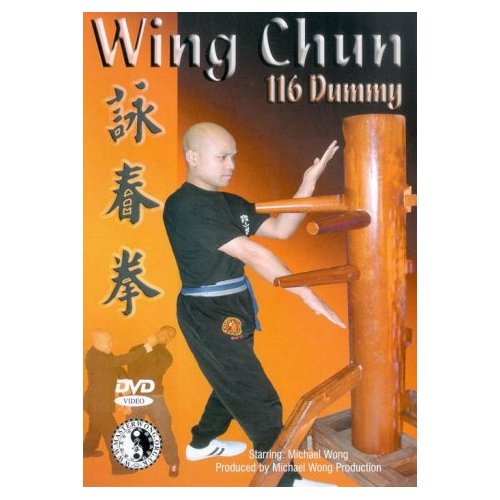
This is the DVD that got me started on the Wing Chun dummy. I have written about it earlier in the blog but here is a DVD clip about it. I like the way Michael Wong is ballistic on the dummy - absolute contrast to many other practitioners of the 116 movements. Note: it's a contrast, not the alternative.

The form is Pen Nam's form it has eagle claw moves in it, too, plus a re-juggling of many of moves that Yip Man's system has. If you know this form then you can add in Yip Man moves to spice it up. Yip Man's moves has more diverse kicks, (but not as diverse as Randy Williams / Austin Fong's system). There is some straight blasting in this form but not in Yip Man's form.


Wednesday, April 30, 2008

Robot on Dummy

This is one dummy display that IS hard to match ! Maybe it's getting at the idea of simulation and 'aliveness' that Mat Thornton criticizes traditional training for, (no footwork). Ok - no it ISN'T, but ...good work here. I got this off youtube and its by Andy McGrath a 3D animator interested in Wing Chun. Good skills. www.anthonymcgrath.co.uk

Extreme Slam Set Segment

I bought this double-VHS set when I got my dummy in 2003/4. What I liked about this set was the insights and uses of the dummy. It went beyond what the classical instructional tapes had and was better than the JKD dummy tapes I had. JKD dummy use is very fast and hard to see what the practitioner is doing, (ok that's not totally true). Here Simonet had some integrated moves from other arts and does show multiple applications for the same tool. That is worthy.
Here I liked the straight blast that ends in the eye jab / fuk sau shape.

Saturday, April 05, 2008

Sticks On The Dummy

Here is Addy Hernandez - Joseph Simonet's co-worker using the dummy, [minus its leg] for stick work. Fair use of the dummy. Lucay Lucay does something similar. If you are worried about splinters, then use rolled up magazine, or just put a tree branch in where the arm was.

Jeet Kune Do TRAPPING 1 Also Applied To Dummy

This is some good teaching and application video from Youtube. It's about the controversial skill of trapping:

Some people debate the value of this skill. Some say its H-a-R-d to implement. Some say it is hard - but you need to practice it - therefore.

I only know about 2 or 3 traps properly. You either excel at this or don't bother, I sometimes think. Complex or compound traps just arn't going to happen in an assault, they are best seen as using energy in different ways.
Interestingly Geoff Thompson said trapping is useful - it's how its applied. A basic pak sau and punch is well worth knowing, I believe as it could be seen in practical situatuations - e.g. finger pointing aggression; grab attempt. Remember you can re-feed your punch - dont bother swimming for another solution. OR just change your angles for a new line of attack.

Some JKD schools like Ted Wong's don't do trapping I understand. Maybe trapping will be reclassified to fit into wrestling and stand-up grappling. I can see chi sau going this way - see Alan Orr's www for ideas there.

Anyway what I liked here was the use of the dummy / other person. This is a clear video. Credit to the teachers.

Thursday, April 03, 2008

Useful Quote From Josh Waitskin

Here is a good quote from Josh Waitzkin author of the book The Art of Learning.

From: http://onthemat.com/articles/Josh_Waitzkin_Interview_01_25_2008.html

"But to answer your question—honestly, a very large percentage of Tai Chi practitioners have their heads in the clouds…and they are the ones who make the most noise, stage the silly fake demonstrations, and create a cultish mindset that a practical fighter can just walk right through. I’d write them off too. Plus the system has little groundwork and most teachers are still closed minded about that element of the martial arts. Frankly, I think this problem is rampant in many traditional martial arts—teachers are terrified of looking bad and losing students so they create a world that denies what they don’t know."

What is interesting here is Josh is an uber MMA. He cross-trained Tai Chi, Brazillian JJ and chess !

He has ideas of how they are linked. What I liked in this quote is how he shows learning can take place in a bubble. If you stay in one place you miss out external voices that may want to test and question your premises. I can identify learning in martial arts when people refer to the techniques validity, via a master, in the system.

What has this got to do with the Wing Chun Dummy. Well it can be applied as a reminder to the learning of the form in its own right - rather than applications. You may get a shock if you arn't thinking about applications. Also you look on youtube and the comments people make about diversity of use of the dummy. It shows how people think there is one right way. That is the 'closed' mind set mentioned here in the quote.

It could be BJJ and Vale Tudo develop a closed mindset too if they end up thinking, due to their corrections and criticisms, they have arrived at THE method and stop pressure testing it and examining even old ideas again.

Monday, March 17, 2008

Triangular Footwork

This footwork #is# in the 116 movements if you choose to see it. The leg is in the dummy to make you vector on the 'V' shape. (I had drawn some pictures earlier on in the blog - see archives for these ideas, but now I know how to link to youtube its a good idea to revise this).

Doesn't matter if the 116 movements has the 'exact' footwork, as your drills can just absorb differences).

Psychology-Richard Grannon- Learn To Deal With Verbal Threat

Look at this. Self-defense orientated video. Here the instructor offers models of what pre-fight rituals look like. This is aggressive behavior that men get into before a conflict. This is worth knowing about. (Geoff Thompson started making people aware of this in the mid 90s).

The hands up can be used when on the dummy - pretend you're fencing off people in each of the forms sections maybe, or in your drills ? Hands up at all times above the dummy arms. Maybe the dummy arms touch you ? - then its elbow range.

Here the video uses talk to diffuse the situation and be vigilant, too, for aggression.

Parts of this video offer very new approaches to 'the fence' - @ 6 mins in he looks at type of talk stance. This is even sideways on like a therapist ! This is interesting - (maybe if you are trying to win the person over to be your friend / be friendly. Get this wrong and your dead).

Friday, March 14, 2008

Words of Wisdom PT 1

Here listen to the 'new paradigm' for learning and training MA by Matt Thornton. See his chess analogy too @ 6.30 onwards. Very apt.

Friday, February 15, 2008

Silat Meets Wing Chun

Here we have Wing Chun mixed with Silat. This could be trained on the dummy - those chopping straight blasts. It wouldn't need padding either, as the blade of the hand can chop hard on the dummy.

The way they talk about Silat's evolution, it is feasible Southern stylists came from China with Wing Chun ideas and they were adapted. Plus the weapons of Kali ....


Wing Chun - Dummy form explained

Here the teacher shows dummy applications from the form. Good stuff. Worth watching all the way through.

Wednesday, February 13, 2008

Opening Credits -- The Taking of Pelham 123

This can be the tune for the dummy. This is Shire's peice that repretsents the hussle and bussle of diverity in New York.
Well the dummy can represent that in its moves - or the moves you apply to it. Joseph Simonet's work on the Slam Set is very diverse. I dedicated this to him !

Thursday, February 07, 2008

CCK TCPM Wooden Dummy Form

Here is another Kung Fu use of the dummy (non-Wing Chun. I can see some similarities in how Randy Williams uses his dummy form and this. Eg. use of elbows and knees in the form here. Leg sweeps too. Some differences - a 360 tiger tail spin in this. High protecting arm in this form too.
If its possible the best camara angle for dummy forms is 3/4 down view. Its hard to see the near side when the practitioner is camera side.

Sunday, February 03, 2008

Master Donald Mak demo in Hong Kong

Look this is an 'air dummy' - someone doing the form like an Air Guitar ! There is a Nike advert out there with a woman doing the same thing.
This practitioner has nice crisp movement.

Human Weapon Kung Fu - Chain Punching

Glad to see this topic being addressed. Wish I saw all of this program.

Monday, December 17, 2007

How Many Wing Chun Fighters Does It Take To Change A Lightbulb ?

The above joke title applies to Wing Chun especially as there is so much hair splitting. The answer is : 5. One to screw in the bulb - the other 4 to say they are doing it wrong !

I am prompted to say this because I saw on someone elses' blog they had a youtube.com video on their wooden dummy use. He had to disable comments as he was getting slated. Even if he was perfect in his sub-style of Wing Chun he would STILL get slated I bet (see above joke answer).

You don't get this in MMA, Thai boxing, Judo etc. These arts are very effective. They test their techniques full contact too remember - an acid test.

Saturday, December 01, 2007

Steve Sinclair's wooden dummy knowledge

Go here for some good insights:

http://www.ukwingchun.com/Wooden_Dummy.htm

very sensible comments made.

For example he shows the double 'garn sau' hands - that are broad apart onthe dummy but are close in application.


I have his video on wing chun 'Pure and Simple' and its very good indeed. Not many people talk about it, strangley. It's the only one that shows you how to use the hit fall wine - Dit da Jow - to condition your hands after sand bag use. He does this in a circular motion really rubbing hard into the area. I use this and believe it works - but don't know why - it could be just the rubbing itself ?

Friday, October 26, 2007

Josh Waitzkin: The Art of Learning on ABC News - Part 2

Here is part 2. The clips about Martial Arts look more like Ju Jitsu than they do Tai chi. Then at the end he says why ! Hope he succeeds !

Josh Waitzkin: The Art of Learning on ABC News - Part 1

This is the first of 2 videos on a chess master who also is into Martial Arts. He has a book out about the learning processes behind both. I want this.
I know this isnt about the wooden dummy - but I have to make an exception - because I have an interest in chess too and the learning process too. So should you. There is a debate out there about 'transferable skills' / 'sports specific' skills etc. in learning. Search for transferability in what you do. Get a pair of eyes that see ideas in other disciplines. Be a magpie don't be like water - as you fit into someone else cup.

Friday, September 28, 2007

Who Do You Believe?

Look at these three pictures. They are from a known Wing Chun book that has positive reviews, (Alan Gibson Simple Thinking Intelligent Fighters); and a JKD book that has positive reviews, (Teri Tom The Straight Lead). I know this post is not about the Wooden dummy but I wanted to make the point.


Here the Wing Chun stance takes forward pressure.


Now look at this picture from Tom - same stance - similar test - different result ! The JKD stance is solid but the Wing Chun stance buckles under a palm. Mmmmmm.


This is Ted Wong here, too, involved. He was Bruce Lee's training partner. And he appears in Randy Williams' Wing Chun training videos so he no stranger to these issues.


So what's going on ? What sense are we to make of all this ?


The point is how when you crosscheck your information in martial art research you sometimes get 2 different answers. I have seen this Wing Chun stance pressed forward so I know it can withstand some pressure. Alan Orr - a MMA inclined Wing Chun player - has this useful drill that is worth checking out below. I adapted it from his www page just to examine a point :

http://www.alanorr.com/htdocs/articles/wcpowerarticle.html


I may invite all 3 authors - Gibson, Tom / Wong and Orr - to reply to what they see here and explain what the issues are involved here.

It would be interesting to get feedback from each of these experts: to explain how the same forces applied to the same structures yield different results ! What is it I am missing here ?

PS. ON reflection this should be telling us to pressure test the knowledge we are given and double-check it. Take nothing on trust alone. If the Wing Chun stance takes time to perfect and eek out its nuances then I can imagine the JKD comparison being 'accepted' by the student as 'true'. I am not in a position to judge properly what is 'true' here. I may have missed a point. But I suspect this example isn't isolated in martial art literature. (It isn't isolated in chess literature. You get the same positions on the board sometimes evaluated differently - it drives you nuts if you 'need' your answers given to you).

Silat Suffian Bela Diri - Kuntao (Empty Hands) Mook Jong

Look at this - a Silat man using some shapes on the dummy.
Other than Joseph Simonet this is the only time I have seen a Silat man use a wooden dummy. Applications need showing ideally.
The use of the drills seem to be mainly conditioning - eg the ones that bash the arms @ 90 o angles nearly. But there are some moves that sheer along the arms. Believe me these are sought after moves when training after a while as you save your arms from destruction.

Sunday, September 23, 2007

Sifu Chung Kwok Chow Wooden Dummy

Here is a video that illustrates the traingle idea that I drew below and that Randy Williams uses in his drills video on the dummy. Its a 'male triangle' in Kali speke.

Friday, September 14, 2007

Stopping The Shoot ?

When I tried to spar recently I found it really really hard to stop the shoot for my legs. MMA people are good at this - ie they change the level. Wing Chun doesn't.

I thought maybe this idea could be worked either on the bottom arm or the leg even ! You simulate pummeling for under-hooks [I need to keep elbows in here] and then drop your hips a level and shift your legs back. You're meant to simulate the force driving you back as you prevent your hips being forced back and your legs grabbed.

I was a bit half-hearted in this as I didn't want my hands to slip and break my face but with practice I bet you could get quite aggressive on this and even drop to the dummy leg level. It is just an idea. ( I wanted to give it a try to drop to leg level but the camera would need readjusting and it was getting dark).

Low Kicks on the Weeble

Here are some Wing Chun type kicks on the dummy. They are low line kicks. They are straight line and I know they are awkward to deal with. I am wearing my safety shoes while doing this. The heel takes the force so Wing Chun slippers would not be up to this.

If you cant tell by now I don't take myself too seriously - the Weeble [tm] stuff etc.

Straight blasting the Weeble [tm]

"When in doubt straight blast". I think Bruce Lee is attributed with this phrase. When I saw these punches I thought they looked like Rabbit punches. I know JKD uses these too as well as Wing Chun.

The Straight Blast gym under Matt Thornton use boxers crosses in fast succession not this type of punching I am doing. That is really harder to do and is really committed body weight forward top half.

I know this punching makes people flinch at least. I throw in elbows too on the pads. The punching isn't an end in itself.


Weeble Dummy [tm] ?

In a conversation with a learned colleague the wing chun dummy doesn't 'give' and can be limited for some martial art applications. This was a reason why one of his Wing Chun friends had stopped using it in favour of a punch bag.

I am a fan of the dummy so set about creating the 'Weeble Dummy' [tm]. Ahahaha. Seriously I know that my dummy can be made to give 'if' you remove the wedges from the corners of the trough its in / and / or put it on bricks. I put my dummy on bricks to stop it getting too muddy and stuck in there. Also it heightens it when I want it higher. THAT is heresy I know to traditional wing chunners who like it low so their stance is low and legs bent. Joseph Simonet in his Slam Set dummy said his dummy is modified as he is is taller and not expecting small people to fight him (actually he didn't say it like that but you know what I mean).

In another Blog on wing chun [see below] the Classical dummy should not give 'if' you want your structure to be tested and force going back down your legs.

Anyway enough of the apologetics. I wanted the dummy to rock so I can do this drill shown on the video. The leg is taken out so I can move the whole unit with my arm and without the leg acting as a break. I put 2 x pads up for the elbowing. I could have used my Thai pad and belt to keep it up there alternatively. The dummy weighs about 13 stone. I have added extra weights on the base to make it heavier - although they may have slidden off in this drill.


I TOOK THIS VIDEO OFF. On re-watching the elbow I used looked like one from a Wing Chun stance, Lan Sau , up-right stance etc. [like a 90 degree elbow attack - I should have had a more Silat angled elbow - pointed forwards more and hand 'home' on the neck, less space between the elbow and my chest and an angled torso - ready to flick out to grab the dummy.

Sunday, September 09, 2007

2 triangles or one ?

Look take the 2 shapes below and add them in for a footwork matrix !? Good stuff eh.


Look there is no north south line. One of the things I regret is learnining to step forwards and backwards in a line mechanically. No doubt it has its place but the 'V' and '^' angles of stepping are really useful and worth in-graining early on in someone. Backwards steps are a bad habit to rely on to get out of 100% pressure. In a confrontation in public if someone is blocking your path a step diagonally forward or away would move you around - or away - from their colleague who may be behind you unbeknown to you.

The is a place for forwards and backwards lines but maybe their practice should not be moving me away from these other angles.

Tuesday, September 04, 2007

Footwork - angles to think about.

Here are 2 diagrams to show footwork ideas on the dummy. These can be interpreted classically or Jeet Kune do style borrowing from Kali. Randy Williams' work on the dummy does use this type of approach from a classical view - ie body stance is upright in Moving on the 'V' or male triangle. A Kali approach angles the body away from center line however in addition.


The 'V' shape:


Here stood at point 1 a blow from the left hand side or even center can be avoided by stepping to point 2A. In Kali this is where the 'pressure' of the attack is evaded. Maximum attacking pressure is @ 1. Therefore we need to be away from point 1.


(Invert for a right handed attack ie- step from 1 to 2b).

You can experiment how tight you get to the dummy with the prefered range: in tight if you want for grappling finishes. At a distance if you have a stick / boxing / kick boxing range. In retreating you can slide back from 2A, 2B along the 'V' again. This type of retreat I notice Alan Gibson makes in his book on wing chun (vol 1). He uses garn sau hand shapes [a cutting parry - if you like but it doesnt matter (non wing chun people just think block / counter strike / cover) ] to in retreating from attack diagonally away. He likens it to zig-zagging away from a sniper bullet. The point is to avoid a step backwards in a straight line from a frontal attack. That allows pressure to build up against you in an escalating manner.

A more traditional way to see this 'V' shape is to step off to 2a and apply say bong sau / lap sau and a stamping kick to the leg of the dummy.

The 'male triangle':

Here is another method of stepping. The Yip Man form has this in the 116 movemnts and involves moving from 1a to 1b with the right leg and the left leg circles in to 1c. Once there it can sweep or kick back with the heel on the calf muscle - whatever. the point is it bisects the opponents stance by cutting in on the triangle.

Williams work on dummy drills shows another application of this triangle where hand shapes like tan sau and punch [tan da] are applied from standing square on the base line and the hand movements are applied as a leg plunges in to 1c. When I have done this I either step deep in to the base of the dummy or try to collide with the leg to impact with a clashing movement (ouch !).


Male triangle vs 'V':

The 'V' evades the attack in a counter-attacking way / the 'male triangle' is wither direct straight in (OR can be evasive but circles in too). The choice is based on (your) style and context of the conflict.

IF YOU READ THIS PLEASE COMMENT

Sunday, August 26, 2007

Catching-Up !

Ahhh. I typed in my name for this place on google search to see what came up. And someone had noted it. So ... this jogged me back into action here again. Thanks Dojo Rat !

I have been meaning to put up progress on here and talk about things. It gets a bit demoralising when no one replys to my messages here #but# if its being read by at least one person who goes off and ponders then its worth it. Also if it helps me reflect on ideas then this needs to be kept up.

OK. Whats new. I have been looking at footwork on the Kali / Silat side of things. Wing Chun does seem to have a paucity of official footwork so I have always been wanting to check up on the Silat side of things.

What I have been doing is stepping on a 'V' shape - first one side then the other. This gets me to the outside gate. In a way this IS what the 116 movements does in the form it makes you move from centre to flank, back to center to flank .... in a 'V' shape if you like. BUT here the 'V' Kali does just go to the edge 1st of all - not just if the center is blocked.

Also I have been stepping in on the male triangle ... imagine a pyramid pointing forwards. I have been stepping forward to the point away from me with a circle step [like in the form that goes to the leg sweep in the 116 movements.]. The legs meet at the peak of the triangle and I sweep one foot back to the corner of the base. The sweep is called a biset - it drags back to base.

I tried to make a short video of myself using the dummy for a test. The dummy had no leg on and I was just seeing what it would look like. I was really hitting the dummy hard and wacking it - showing off if you like - and on the video you cant pick this up at all really ! I have more respect now for the videos I see on places like youtube. I bet these guys do really have some force in there that doesn't come across on that medium.

Using the dummy without the leg plugged in is very useful. I have reconfirmed this after watching Jospeh Simonet's slam set tape I have. It lets you do things that are prohibited by the 'official' form or space wise - like stand toe to toe and 'pummel' like grapplers for underhook.

I will post some pics here of other training things I have done or attempted and gave up!

Thursday, December 07, 2006

Elbows, Knees And Kicks And Confidence Stuff.

I went to Vale Tudo the other day after a break of many, many months. I did this because I don't attend any clubs anymore and this was a gathering of people I knew semi-formally.

One bad habit I had that was revived was trying to deal with low kicks with my hands and arms. This is a really hard habit to break. I thought I had broken it but its come back.

I had a think and I believe its the dummy form that encourages this. When moving across the dummy, there are double garn-sau to kwan sau transitions. The double garn saus must be in there affecting me. I need to erase this but may have to drop the double garn saus [these are pictured in the DVD cases in posts below - it must be dramatic or something].

Why doesn't the Yip-Man lineage dummy form include knees or leg blocks to kicks ? Only the one performed by Randy Williams includes some knee and leg defenses. I must transplant some of these into what I do and / or drill them. (He has a bong gerk type move to the lower dummy arms too - if I recall).

Also whats not in the 116 movements are elbows. Why arn't these in the form ? You don't have to strike the dummy but can simulate. Space could be made for this by removing the tok sau moves that are over-represented, (be honest do you envisage using double-tok sau in a confrontation ?!)

Is this heresy ? Does it matter if you mess with tradition ?

Also while I am at it all my Wing Chun stuff goes out my head when in Vale Tudo. I would have to consciously tell my self 'I know some wing chun shapes' to use them. This is funny because when not doing Vale Tudo - say if I am frightened by something then wing chun shapes emerge. I wonder why this is.

Actually one wooden dummy move does look like a Vale tudo move. The circling hands of the 116 form (kau saus ?!) do look like pummeling for under-hooks in vertical grappling.

I go through ups and downs in faith in my dummy / WC skills. I don't think I would last that long in a traditional WC method vs Vale Tudo style approach. A skilled player can close the range so fast they are chest to chest straight from boxing range - with no in-between it seems. And then they dive to a lower level like a U-boat. Some fast footwork must be needed to counter this to keep the range or something.

Thursday, November 23, 2006

Same But Different ?


I am interested in the wooden dummy for this blog but this is a general issue of Wing Chun that goes beyond the dummy. It's the disputes within Wing Chun over how one way is 'the' way and everything else is modified.

I had a good replay to a question on the AWCAOnline blog that you should be looking at - if your not already. I asked Phil Bradley its proprietor why footwork is an issue in dividing Wing Chun schools.

see here :

http://awcaonline.com/blog/?p=69#comments

His reply reminded me of the issue of relativism in the philosophy of Science and Thomas Kuhn's issue of Paradigms. This was derived from astronomy, but the point here is how different interpretations can be seen to be true, relative to the 'framework' they are applied with.
Phil made the point that different moves 'work' within different frameworks of footwork, [paradigms if you like]. The moves are 'true' relative to the way they are trained in the specific location / school that spawned them. Outside of this they may not be 'true', given a different 'paradigm'. IE a different school cannot utilizes their moves as their foundation is different and not optimized for those moves.

An issue here is they are same Wing Chun family but a slight difference in a variable yields new consequences. The impact this has on the 'scientific' street fighting is a cultural one - politics occurs around the 'truth'.

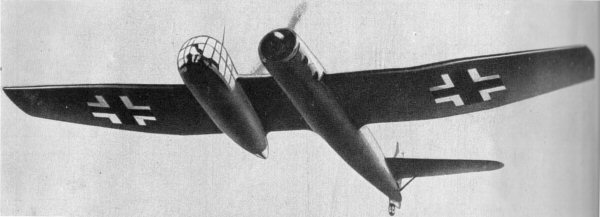
I am including 2 pictures here of 2 airplanes. They belong the same family of planes but they differ structurally but were capable of performing a 'fighting' function:


Here is a conventional design.


Spitfire:


This is the Blohm and Voss 141. It was a viable plane design:


So what's the point. They both 'work' but are different too. (Check the link on youtube if you dont believe the above plane flew: http://www.youtube.com/watch?v=9JAH6CiOu0w) .

Which is the 'true' plane ? Which disobeys the laws of flight ?

Friday, November 17, 2006

Bruce Lee and the Dummy

Here is an article from kungfiMagazine.com


I include this because it enlightens us to alternative uses of the dummy and some innovative ways to use it and train. This is thinking outside the box stuff and if you're not used to this the nit will cause discomfort or fascination.


  • The dummy 'form' is split up into 'sets' of moves 1 to 12,  that can be juggled
  • The juggling of the 'sets' allows for more free-play of the moves vs application in a linear way. E.g. start at set 7 and then move to 2, rather than work from set 1 to 7.
  • The dummy can be used like a punch bag to practice angles, leverage, movement, accuracy


I would love to have seen a film of Bruce Lee on the Dummy it would be really enlightening indeed.
There are some videos - very rare - of the Bruce Lee Jun Fan sets - 10 sets of movements that look like modified Wing Chun. And then another 10 Jeet Kune Do sets that have moved away from Wing Chun-style and are more dynamic (by this I mean less upright structure and use of space to zone in and out and around the dummy is more varied).

I wonder why Inosanto hasn't published material on these sets and their use or a video on them ?

(I will review the tapes I have on these in another post- the are by a Spanish practitioner)

http://ezine.kungfumagazine.com/magazine/article.php?article=92

Worth reading.

Wednesday, November 15, 2006

research ...

MMMmmm. In relation to the 1st link on youtube below I emailed an instructor on a Wing chun web site who is skilled in distance learning. I did this to see what he would say about the 116 movements and how he interpreted it.

He didnt agree with the way the criticisms were formed but there were some grains of truth he felt.
I re-looked myself and yes its not perfect: he does seem to lean in for the butterfuly hands - but I see instructional DVDs 'masters' doing that too - he he isnt alone. He thought too there should be power in the strikes. (I thought the sharp clacks = power ?!). Also power on the dummy may not always be the aim *IF* the user is biasing positional skill - I think - for what thats worth. (This is all open to interpretation).

I re-looked at his feet and he may be on his toes for pivoting.

The point of this isn't the practitioners skill - its the use of the internet to share and understand and provoke *useful* criticism. Between the Martial Artist putting up the digitised video, the comments of the youtube 'community, my questioning and reply, posting to another blog to another head instructor and re-watching a circuit of knowledge is reinforced for me.

In other words some new understanding was given to me. I could try and contact the original martial artist and quiz him - that would too give more learning. Don't know how he'd respond though. maybe he would say - yes - I have modified my approach. Thanks very much. Or he could say we are taught to pivot this way because ... let me show you why in this technique ...

I will say it now I am not that good myself on the dummy. I would get slated if I put a video of myself up on youtube - probably rightfully so in some phases of the moves I do. But its worth noting if you look carefully on instructional tapes etc. you do see inconsistencies by 'masters' in their own forms - ie it can be asymmetric sometimes; some moves omitted on one side not another, ad hoc moves inserted. I don't find this a big deal BUT for those who really want to pick hairs be aware of this there is no such thing as perfection in use of the dummy even when doing prescribed forms.

Sunday, November 12, 2006

An example of the 116 movements

Here is a link to someone performing the 116 movements the 4th form of Wing Chun (usually).

http://youtube.com/watch?v=XX_QTqF1GFQ

When I first heard of Wing Chun in the late 80s and looked through MA magazines, I used to wonder in awe what this would look like and how advanced one must be to reach the dizzy heights of accessing this form. Videos to see it cost about £33 and were above my pocket.

Now, in the next century the digital revolution and growing market for Wing Chun has made this form more accessible to see - and learn. YouTube is a great place. The whole idea of this and the 80s situation I describe are approximating the idea of a 'gift society'.

I liked what this practitioner has done here in his video. Nice clacking noises signify power into the dummy. I believe he has body unity and knows the form. Some of the negative comments he gets shows the bad side of free-speech. he gets slated and there are no comments showing him how else he should do the form specifically if he has got it soooo wrong. (He hasn't and the comments are attention seeking snipes).

The dummy can be interpreted differently within WIng Chun schools as well as between them ! Personal style is relevant too.

Here is Yip Man doing the form:

http://youtube.com/watch?v=1m9cOBOhsS4

He is doing two forms here, Chium Kiu, where the practitioner learns to pivot and learns some kicks (plus other things). These shapes are then also planted onto the Wooden dummy along with moves from the 1st and 3rd forms.
It is said that Yip Man simplified the form from 140 moves to 116 moves - but if this is so why are mainland Chinese forms also adhering to the 116 moves format and not 140 ?

http://youtube.com/watch?v=ZTXA5snEYa8

This is William Chung's contribution to the wooden dummy. He has nice chops to the dummy very fast and smooth. His footwork is staggered at points and marks out his schools difference to Wing Chun over some others.

Monday, October 30, 2006

Training outside ?


One reason why I bought my plastic Wing Chun dummy was because I have to train outside. It tends to rain outside - especially in Britain. When you train outside the ground gets churned up and the grass vanishes and is replaced by mud.

To get around this I bought a cattle mat / stable mat. This is a thick rubber mat that is about 7 x 4 foot or so. It weighs 7 stone ! I lay this down to train on and have some old car mats to place when I step off the mat. This helps to aid me train when it rains. If I didn't have this it would be a mud bath. Also I would slip all over the place.

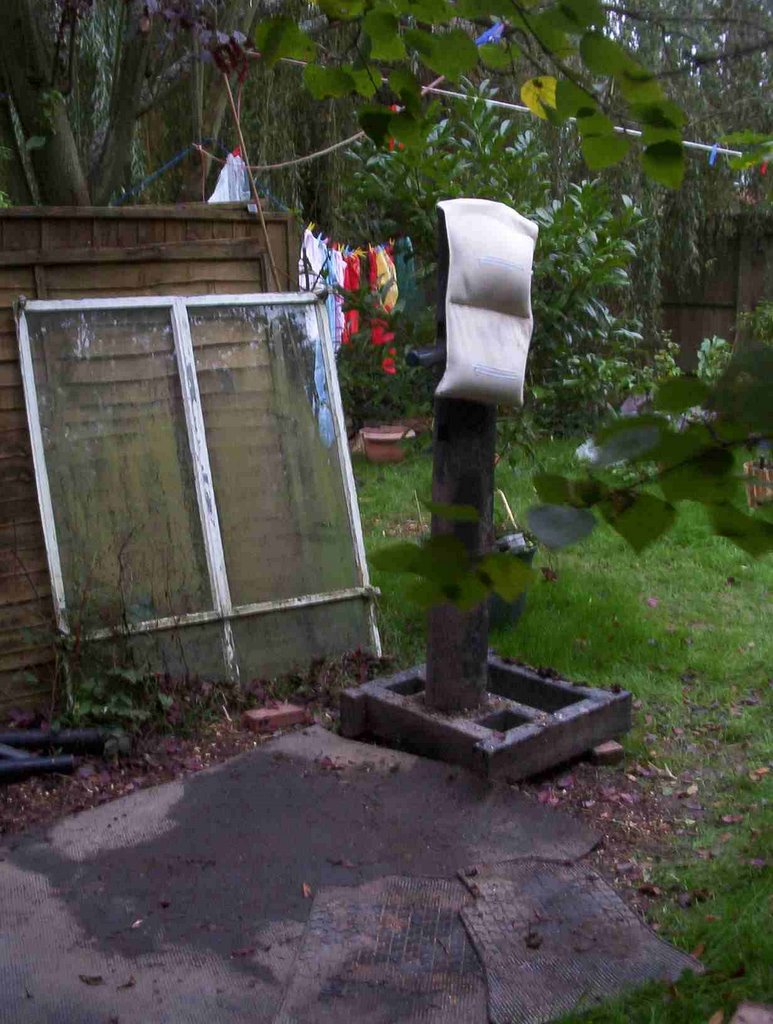
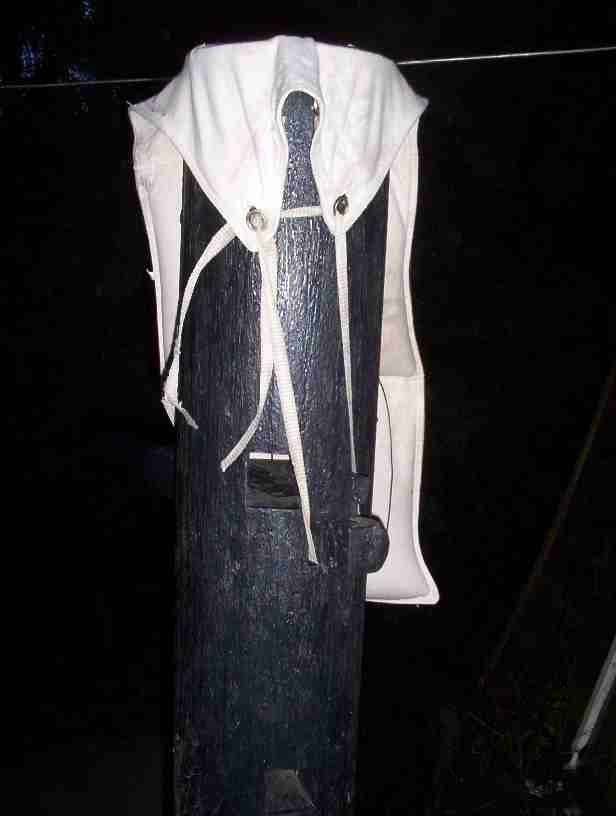
Also I include picks of how I add in a sand bag to the dummy. I don't want to nail any bags to the dummy so hang it with plastic taping I got off a parcel. Its strong enough to take the weight of the wall bag [with just 2 sections filled]. Because I used the bag once when it was wet the normal side is splitting and leaks sand when punched so I taped that up and use this zipped side. I don't usually hit the zip so it doesn't matter.


Leg and 2 arms were taken off today as I was just kicking and entering with straight blast.

Tuesday, October 03, 2006

Randy WIllams work on the dummy

Book Review: Wing Chun Gung Fu
The Explosive Art of Close Range Combat
Volume #3 Mook Yan Joang and Mui Fah Joang
by Randy Williams
This is an excellent book, if you have a dummy especially so!
Why?
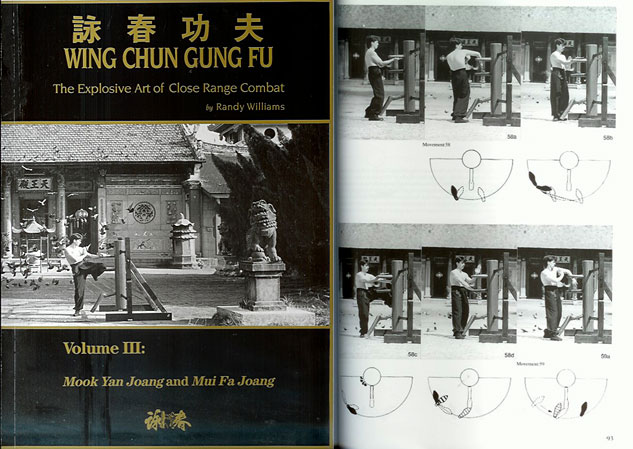
Because it has foot patterns in it – as this picture shows (Ipludered it off the web). This is very helpful. I had managed to derive the footwork from Michael Wong’s DVD using slow motion stepping – had I got this book beforehand it would have saved some time indeed. But I was pleased I had got most of it ‘right’.
Also of interest in this book [its quite big using A4 pages] is that is talks about the plum blossom posts. This is very rare indeed. Its an array of wooden posts that the wing chun player can step on in a pattern from one side to another using arm shapes too. Or even run through kicking the stumps as you go. The heights of the wooden stumps can be varied from 1 inch to a foot ? No other wing chun book covers this and Randy Williams really give you a lot of information in this book – with sample patterns to navigate the posts. The attention to detail is excellent. I have 3 other books in this series. This is my favourite of the series. They are hard to get hold of the UK and the copyright is 1989. They are ahead of other books published about wing chun at that time and very very useful.

Randy Williams 4 x tapes on the Wooden Dummy too are excellent. These are 2 on the 116 movements and applications and 2 on wooden dummy combat drills. Get these if you have a wooden dummy as they include details that are very well described. As a teacher Williams attention to detail and use of language / metaphor to explain is top dollar. I rate him as a teacher and his work is up there with the best of them (I need to nominate who I regard these are at some point – remind me). Even though the form starts to diverge from Yip Man’s 116 movements (does it matter ?!) its still of use to any wing chun stylist as you hear / see ideas you may not have considered. There are kneeing motions for example that are highly useful – I haven’t seen anyone knee the dummy in a classical form. (Only Joseph Simonet does in his Slam Set using Thai knees).

Review


Review of Master Wong’s DVD on the 116 Movements.

I bought the 1st edition of this DVD in 2003 about April and didn’t have a DVD player to watch it until December of that year. Come to that I didn’t have a Wooden Dummy either ! (Actually I still don’t really as I have a plastic Immortal one – but that split’s hairs and we want to move away from all that. (Ok I have wooden arms specially made for it – happy)).

OK the 1st edition is good. Very good. The use of the menus is very good as it supply’s aspects of the form into chunks. Applications too have a menu for themselves too. It’s the best menu system I have seen on any DVD of martial arts. It allows you to get to the part of the form you want.

To learn this form I utilised step motion and drew cartoons of stick men to learn the form. It took me about 5 months to learn the form properly. I would not move on until I knew the part off by heart and had some flow. The learning experience was really exhilarating.

I also cross referenced this form with a disk I got off ebay. This was the Pan Nam disk – which by coincidence was the same style of Wing Chun that Michael Wong’s form was (but he wont go into style issues on the DVD or his www-site for some reason). I then chose aspects I could understand and excluded minor parts I didn’t. For example in the final third there are some finger jabs I didn’t want to use / understand so I modified this.

2 years Later there is a second edition of Michael Wong’s disk and I bought that too. Glad I did as its even longer (3 hours) and more verbal explanation. He breaks down some of the moves and explain typical mistakes. There are some useful drills offered too – such as jut gerk type leg sweep. This is something I drill now.

Also you see some teaching going on in the extras menu in the author’s club with question and answer session. I wonder what it would be like to study there for a year.

Sunday, October 01, 2006

Some links

http://www.johncarrigan.co.uk/

This is a link to someone who got me introduced into the martial ats. He is an original Jeet Kune Do practitioner. There is a rare video tape of him using a wooden dummy in JKD way. This differs from formal Wing Chun becuase the attacks are using moves from other styles and the footkwork doesnt keep the centre line square to the dummy that often.

http://www.awcaonline.com/

This is an interesting place to visit. It has distance learning ideas for Wing Chun and posts videos and commentry. The ideas in this place are thought provoking and has good mission statment to avoid Wing Chun politics [ie the disputes which substyle is 'the best']. I would very much like to see the distance learning program online and live link up to class with feedback potential. The idea is bold.

http://www.youtube.com/watch?v=AWfK6aqWiNU

MMA's contribution and the 'dead patterns debate'
The arguemt posted here in this link is debated elsewhere on the www. It challenges traditional drills and claims they have no function alone - if at all. This implies that much of the drilling material done in many do jos / kwons gyms is not functional.
The counter to this debate is taken up by Mark Denny from The Dog Brothers. He'd argue that drills have a use but you need to know what your looking at when they *are* being applied.
Its a good debate. If you invest time in any form of drilling be aware of this debate and where you think your training does / doesnt stand within this. Its vital to be questioning your learning and practice.
The wooden dummy I think would not be liked by Matt Thornton. Its 'dead' and not alive. My take is its a supplement like a vitamin pill. Its not your dinner its an aid. You can vary the way you train on it to get it more realistic that pure 108 movements style form. Some imagination is needed though. Remember its for those without a training partner.

http://www.ukwingchun.com/Wooden_Dummy.htm

Some useful tips on the dummy are on Steve Sinclair's web site. For example he warns against the implications of having a gap between the floor and the leg of the dummy. This allows the student to avoid the circling movment when moving around the dummy.

The advice for jut gerk (pulling leg or jerking leg ?!) is interesting - stop too deep and you get judo thrown. Step too shallow and you cant get leaverage and you can be sweapt. Sound advice.
Out of interest I have Steve Sincalair's tape Wing chun pure and simple. This is a good tape. What I liked about this was he gives advice on how to condition your hands and shows you how to use a sandbag. He shows you how to rub in dit da jow(hit fall wine) into your knuckles etc. He said Brandy could be a substitute. All good advice. Also I liked the way he gave pros and cons to movemnt and footwork methods. How refreshing. This empowers to the Wing Chun student because they are given choices and freedom to think with in the theoretcial framework of the system. Its not all 'laws' that are relevant in all contexts.

Slightly modified Dummy ?

Ok here is another post to this emerging page.
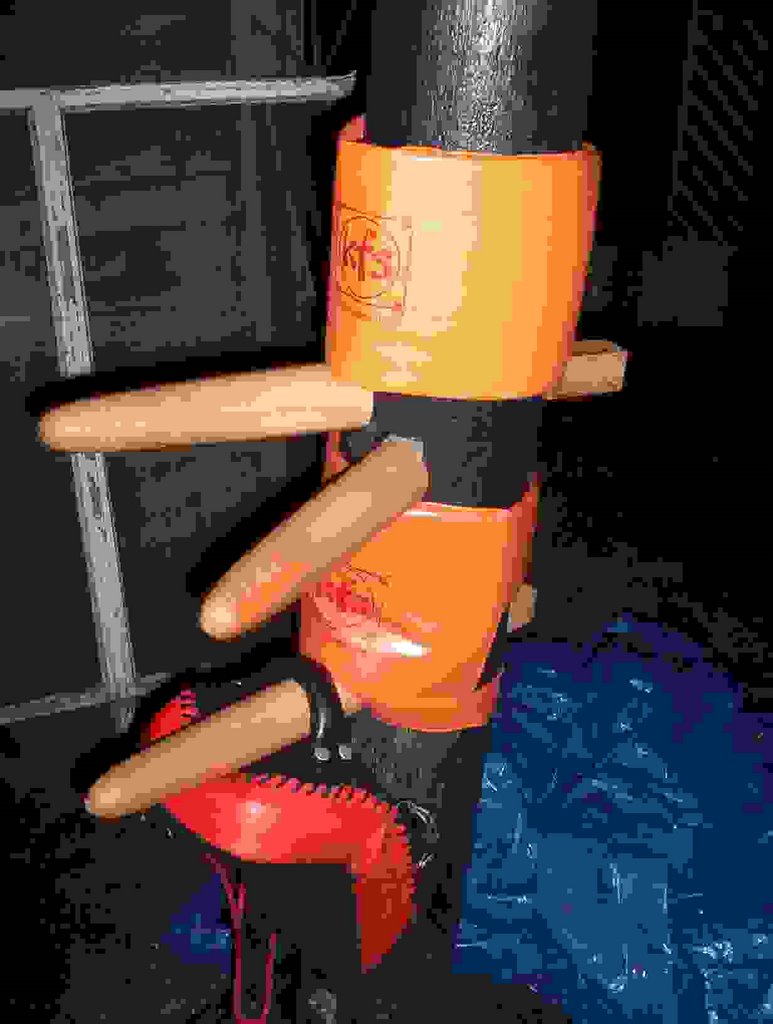
What I have done is to show my dummy. This is a plastic Immortal dummy with the leg removed this time to allow access to my Thai pad.
The Thai pad had been squashed up against the mid section to allow knee stikes. If enough pressure is applied it will stay there and keep its inverted 'L' shape. *BUT* dont go mad - it will slip and you will smash your knee cap. Using the straps just remove the 'L' shape and the pad is straigthened out. This means there is no nice space to absorb the 'forward' direction I want from the knee strike into the body not an upward strike into the arm.
The knee strike is really from Thai boxing as it can easily flow out of a wing chun stance or Bi Jong WC/JKD stance. It doesnt matter- it all hurts.

The orange pads are really to stop you being blatently bruised but you cant go flat out on these. Your joints would feel it. Even doubled up those orange pads arnt enough to give flat out strikes. You would need a sandbag for that.

The dummy has the pegs removed from the corner of the base to allow yeild when forward force is applied - I chose this to give some feeback when force was going into the dummy - and save my joints from absorbing all the force. It may be worth putting the wedges back everynow and then to see if your stance can take feedback with out crumbling.

The reason why I remove the leg sometimes is to allow more access to the pad and also copy Joseph Simonet's use. Joseph Simonet's videos on the dummy in 'Extreme Wing Chun vols 1 and 2' and his form tapes - 'Slam Set'. These had a big influence on me as they synthesised Silat with Wing Chun and Kali ideas. More on this later .....
The leg removed simplifes things and you can still be forced to veer off in a 'V' shape due to the arms. I put the leg back when I want to really be forced to veer off to the flanks more blatently / practics sweeps or oblique kicks to the 'knee'. Even without the leg on kciks can be done to the square base or body of the dummy - but these have different qualities