I found this version of this practitioner doing this kata. This version has no crowd clapping and cheering. This is CHATAN YARA KUSANKU by RIKA USAMI (World Champion).
Listen to the snapping noise the strikes make. These are impressive. Sound is important in martial arts I bet and is underestimated.
We listen for sound when we hit pads in class to check for how clean the strike is. Dull sound vs sharp chopping noise. (The elbow strike is a good exemplar of this. If you do not hit with the tip of the elbow you get a mashing sound - like a wrestling smash, which is a generalised strike not a sharp incision).
The Wing Chun dummy makes a clacking sound when the arms are struck and I have seen Randy Crawford note that he listens out for a 3-beat sound to ensure if the practitioner doing a certain move is stepping to the side (1 beat) then pressing up (another beat), and then another beat sounds to show they are on the outside gate pressing inwards, now. A 3D sound effect.
Shouts are used in Karate - you hear it here, the Kai, to generate fear in the opponent, (I thought it was to generate energy ?!). Breath out is another cue. Can the coach hear you breath or not? I have seen this, as no breath out for striking means you run out of juice and the body has not enough oxygen.
Coach has encouraged us to make a 'shhh' sound to accompany our strikes and breath. That must be a power thing, too. Athletes do this - see Javelin throwers shout when they release.
Other sounds are 'ouch'/ You need to listen out for your partner say stop / or 'ouch', for obvious reasons. You may not be looking at them but need to hear them.
Tuesday, June 23, 2020


Thursday, June 18, 2020
Jesse Encamp deconstructing his Kata back to Chinese mainland origins
The Oldest KATA in KARATE History (セーサン)
This man loves to teach. This man loves to learn too. He does what I have seen in other martial artists: they like to trace the lineage of their moves. The research is exhilarating. Here Jessie shows the Chinese routes of Japanese arts and shows applications of moves.
The way the video is presented is very good as he contrasts different styles of Karate head-to-head to show similarity. That is a good touch.
Thursday, April 02, 2020
Belt + bag = dummy ideas. Not seen a belt used like this before.
This is very cleaver. This sensi uses his belt to modify the bag and allow pulling and twisting type energies to be made. This adds something massively to the bag indeed, and if you are practising solo this would be a good idea to incorporate.
I always like the work of this YouTuber. He really does a lot of thinking behind his videos. He has a suite of videos where he went to China to discover the roots of his Karate system. This was very good.
I always like the work of this YouTuber. He really does a lot of thinking behind his videos. He has a suite of videos where he went to China to discover the roots of his Karate system. This was very good.
Tuesday, February 25, 2020
This is why I love the Internet
This is a great application of the Internet. Jesse Enkamp offers his advice on people's Kata moves via YouTube. 20 years ago this idea would have been unimaginable. Then it was still VHS heavy the basis of learning let alone DVDs coming on the scene. We had 56K modems still in the UK.
Now I see this and hope there is great interactive scope for learning via benevolent people like Jesse.
The advice he gives is good to watch. I like the way he forms his thinking. It is like my teacher. He watches and you can see 'thoughts' going on and then language forming nearly and then a judgement.
The thing with Kata is you cannot do it perfectly ever I bet. (Am I right here?). I sense that the effort needed to self-monitor and remember the shapes / perform the shapes with the 101 things-to-do is the attraction and forces you to return to this for life. The perpetual high maintenance to get you in the zone and keep you humble is the point I bet.
Now I see this and hope there is great interactive scope for learning via benevolent people like Jesse.
The advice he gives is good to watch. I like the way he forms his thinking. It is like my teacher. He watches and you can see 'thoughts' going on and then language forming nearly and then a judgement.
The thing with Kata is you cannot do it perfectly ever I bet. (Am I right here?). I sense that the effort needed to self-monitor and remember the shapes / perform the shapes with the 101 things-to-do is the attraction and forces you to return to this for life. The perpetual high maintenance to get you in the zone and keep you humble is the point I bet.
Sunday, February 16, 2020
One Karate Misconception I Discovered In China
This video is very good as this man does what many other martial artists do they search for truth / origins and meanings of what they do now in other places, and in the past.
This karate man goes to China and in this video he has a friend who speaks Chinese who went with him. He ends up seeing the role of language affects thinking and hence translation. Japanese interpretation of the moves are more atomistic as they use alphabet to construct sentences. Chinese use characters which express an idea. That means moves are not modular but can be seen as whole entities with a purpose attached to them.
This means the way he interprets moves are affected by this insight.
This karate man goes to China and in this video he has a friend who speaks Chinese who went with him. He ends up seeing the role of language affects thinking and hence translation. Japanese interpretation of the moves are more atomistic as they use alphabet to construct sentences. Chinese use characters which express an idea. That means moves are not modular but can be seen as whole entities with a purpose attached to them.
This means the way he interprets moves are affected by this insight.
Sunday, January 12, 2020
Wing Chun 1-Inch and 3-Inch Punch Technique | Core JKD Wing Chun
This is a good video. He goes through the steps that lead to inch-power punching. This teacher is very detailed in his account - as in all his videos.
Along with the dummy, this move has to be the most iconic thing about this art / legacy of how people see Bruce Lee and his use of this move at demos.
Along with the dummy, this move has to be the most iconic thing about this art / legacy of how people see Bruce Lee and his use of this move at demos.
Wednesday, December 18, 2019
6 Sounds of Qi Gong - my new addition
I bought Mantak Chia's book about 2 years ago and did not really get around to studying it. I threatened to for ages but put it off. The reason was, if you do this, you do it properly, sincerely and not flirt with this. I reached that point of acceptance 1 week ago.
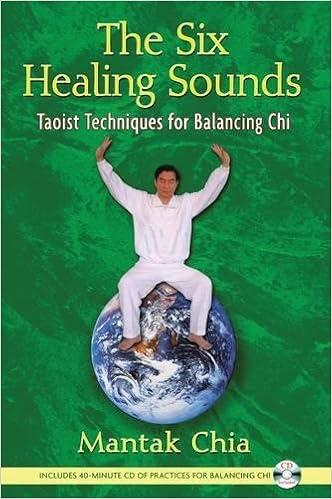
I chose this as I knew the sounds were mentioned in Yang Jang Ming's work on the 8 pieces of brocade, and he uses the sounds but does not elaborate on them in the other materials I had. Also I have seen the sounds in use in other Qi Gong forms and when I read about I saw this looked 'do-able'.
I choose this book and I read a www page that had a useful table of different Qi Gong masters use of these sounds. I needed to know if they had consensus or not on the sounds. If they did then that means there is likely to be some 'truth' in this, as others agree, and I would not be wasting my time following just one person's interpretation of this alone. (There were some minor disagreements in what one or two of the sounds should be, but I went with Chia's work as he was reflected in consensus vs others and his book has a CD too, with the sounds in).
It seems the organs in the body can get over heated and this heat needs dissipation. The sounds act like a heat-sync to remove this excess heat when you breath out making the sound. Each organ: lungs, kidneys, liver, kidneys, spleen, (triple heater), have an associated sound that operates on a type of frequency for each.
Starting out : I needed to know the idea behind this, or else this makes the commitment to this weaker. I.e. know the theory underlying this. I may need to revise this 3 times to memorise all nuances. Next make sure to learn the sounds for each organ. Sounds silly, but some are so close you could confuse them. Expect to practice this, however, to chisel out skills doing this. This is like a health kata, so adopt the same mentality.
The use of colours associates with the organs too is reflected in this 6 sounds which is good. This gives me something extra over the 8 pieces of brocade, that I did not completely use.
The book shows a choice of doing the sounds sat down, or stood up - just like Dr. Yang Jing Ming's book. Also the goal seems to be to get the sounds down properly and then be able to make the sounds sub-vocally. (That has a benefit of public practice too, as no one knows what you are up to).
It is early days, so I cannot say if I have benefits yet.
I chose this as I knew the sounds were mentioned in Yang Jang Ming's work on the 8 pieces of brocade, and he uses the sounds but does not elaborate on them in the other materials I had. Also I have seen the sounds in use in other Qi Gong forms and when I read about I saw this looked 'do-able'.
I choose this book and I read a www page that had a useful table of different Qi Gong masters use of these sounds. I needed to know if they had consensus or not on the sounds. If they did then that means there is likely to be some 'truth' in this, as others agree, and I would not be wasting my time following just one person's interpretation of this alone. (There were some minor disagreements in what one or two of the sounds should be, but I went with Chia's work as he was reflected in consensus vs others and his book has a CD too, with the sounds in).
It seems the organs in the body can get over heated and this heat needs dissipation. The sounds act like a heat-sync to remove this excess heat when you breath out making the sound. Each organ: lungs, kidneys, liver, kidneys, spleen, (triple heater), have an associated sound that operates on a type of frequency for each.
Starting out : I needed to know the idea behind this, or else this makes the commitment to this weaker. I.e. know the theory underlying this. I may need to revise this 3 times to memorise all nuances. Next make sure to learn the sounds for each organ. Sounds silly, but some are so close you could confuse them. Expect to practice this, however, to chisel out skills doing this. This is like a health kata, so adopt the same mentality.
The use of colours associates with the organs too is reflected in this 6 sounds which is good. This gives me something extra over the 8 pieces of brocade, that I did not completely use.
The book shows a choice of doing the sounds sat down, or stood up - just like Dr. Yang Jing Ming's book. Also the goal seems to be to get the sounds down properly and then be able to make the sounds sub-vocally. (That has a benefit of public practice too, as no one knows what you are up to).
It is early days, so I cannot say if I have benefits yet.
Chi Kung / Qi Gong 4 years on
I am now into my 4th year of doing the 8 pieces of brocade.
Goodnews 1] I am still doing it. Why? I think it does have benefits. I do not feel cold the same way I used to. I can wake up easier with little sleep than before. Leg muscles have grown. (the reason why leg muscles have grown is that I sit deeper in the archer position for move [2]. I paid big attention to posture in that since January and that has had an effect. I can see why you have to wait for the benefits however, they do not come overnight. You grow like a tree, slowly.
Other things I do 'new' is to juggle the moves up every now and then. That can help concentration. I also and less concerned with a mechanical in and our breath to co-ordinate with moves. You do not have to do that anyway, so that is one thing less to force yourself to do. Sometimes it is co-ordinated, sometimes not.
I switch off my shoulder muscles more for the heaven / earth push hands. That move can make the shoulders tense if you do not pay attention. (Tense muscles means inhibited Qi flow).
I am more aware when I most likely to have a good session vs a session that is just exercise for exercise sake. If I wait until I am awake more / have eaten / have done some other physical activity then my mind is more quiet.
2] If you do forms / kata / jurus then doing Qi Gong should not be hard to keep up, really, as it is a health form. You need to watch your health and mind as it helps yourself and others too.
Goodnews 1] I am still doing it. Why? I think it does have benefits. I do not feel cold the same way I used to. I can wake up easier with little sleep than before. Leg muscles have grown. (the reason why leg muscles have grown is that I sit deeper in the archer position for move [2]. I paid big attention to posture in that since January and that has had an effect. I can see why you have to wait for the benefits however, they do not come overnight. You grow like a tree, slowly.
Other things I do 'new' is to juggle the moves up every now and then. That can help concentration. I also and less concerned with a mechanical in and our breath to co-ordinate with moves. You do not have to do that anyway, so that is one thing less to force yourself to do. Sometimes it is co-ordinated, sometimes not.
I switch off my shoulder muscles more for the heaven / earth push hands. That move can make the shoulders tense if you do not pay attention. (Tense muscles means inhibited Qi flow).
I am more aware when I most likely to have a good session vs a session that is just exercise for exercise sake. If I wait until I am awake more / have eaten / have done some other physical activity then my mind is more quiet.
2] If you do forms / kata / jurus then doing Qi Gong should not be hard to keep up, really, as it is a health form. You need to watch your health and mind as it helps yourself and others too.
Friday, September 13, 2019
Visualization Training To Remove Fear | Core JKD Meditation Technique
This man has good ideas consistently. Here is one I have not seen before.
Wednesday, September 11, 2019
The Wing Chun Dummy - Why We Train It
This video shows someone stating that the dummy is best seen as a footwork tool to aid movement primarily. He says hand moves a secondary, I sense.
Monday, July 08, 2019
Thursday, June 20, 2019
Ip Man Wing chun Wooden Dummy Form - Section 4 with Application
I do not have a video of anyone teaching the dummy in a 1-1 class. I have seen it being lectured to a group but here the teacher picks up on learner;s mistakes and these are corrected.
Seem like good instruction. Nuances noted e.g. taget elbow not the lower forearm or upper arm.
Friday, June 07, 2019
Jun Fan / Jeet Kune Do Trapping Skills (In Japenese)
This teacher is not afraid to hit is training partner.
Saturday, June 01, 2019
Tuesday, April 16, 2019
Wing Xuan Dao Koan. Form with Wooden Dummy. (VietNam wing chun)
This is very rare. I like the way she weaves her arms and uses her elbows and unfolds theses.
Monday, April 15, 2019
Saturday, February 09, 2019
Friday, January 11, 2019
Wooden Dummy Demonstration ... on a very 'large' oversize dummy
This is a very large dummy indeed. (Did that even need saying). I like the way he throws this around. He is ballistic like Michael Wong. The way the dummy has 2 sided arms and he spins it is good. This must be a bit of a workout.
Monday, November 26, 2018
Expert in a year ?
I have read Sam Priestley and Ben Larcombe's book 'Expert in a Year: The Ultimate Table Tennis Challenge', (2015).
The idea here was to give Sam quality coaching in a year and see if he can penetrate the 250th ranking in the UK with his expertise.
He cannot. But the process did lift him into a quality adult player but the level of 250th ranked player is very high, indeed and the pair recognise this.
At the end of the book the process of growth is the success. It shows how repetition and practice feed into success - realistic success that can be mimicked. At the end of the book he has about 25 core findings. His 22nd point is 'Practice, Learn, Reflect, Repeat'.
The reflection idea is for us to be our own coach.
Another comment he makes is 25 Don't compare yourself to others, as that sets you up for unrealistic benchmarks and a feeling of inadequacy.
1 Turn it into a thing.
This means make the activity a part of your life pattern. It is like a new arm, no a collectable toy.
He said if he was not part of the challenge - which had set the goal of being an expert in a year then this would not have progressed at all.
The pair had posted youtube videos which can be looked back upon to show growth.
A by-product of the challenge was it inspired others to progress too and mimic this idea. Sam has gone onto accept other challenges - such as be a Brazilian expert in a year. Be aware however, Sam has time and money to travel off to training camps for coaching and competitions, too, which we wont all have but if you take point 25, above, that is not an issue really, it just shows he is doing what he can to achieve his goals within his means.
The idea here was to give Sam quality coaching in a year and see if he can penetrate the 250th ranking in the UK with his expertise.
He cannot. But the process did lift him into a quality adult player but the level of 250th ranked player is very high, indeed and the pair recognise this.
At the end of the book the process of growth is the success. It shows how repetition and practice feed into success - realistic success that can be mimicked. At the end of the book he has about 25 core findings. His 22nd point is 'Practice, Learn, Reflect, Repeat'.
The reflection idea is for us to be our own coach.
Another comment he makes is 25 Don't compare yourself to others, as that sets you up for unrealistic benchmarks and a feeling of inadequacy.
1 Turn it into a thing.
This means make the activity a part of your life pattern. It is like a new arm, no a collectable toy.
He said if he was not part of the challenge - which had set the goal of being an expert in a year then this would not have progressed at all.
The pair had posted youtube videos which can be looked back upon to show growth.
A by-product of the challenge was it inspired others to progress too and mimic this idea. Sam has gone onto accept other challenges - such as be a Brazilian expert in a year. Be aware however, Sam has time and money to travel off to training camps for coaching and competitions, too, which we wont all have but if you take point 25, above, that is not an issue really, it just shows he is doing what he can to achieve his goals within his means.
Sunday, November 25, 2018
Qi Gong 3 years on
I have been doing qi gong - chi kung - for 3 years now.
This is my yearly update.
The
I cannot say I have made any improvements in this year. I have struggled to get my mind into neutral too many times this year, which is why. I have had to come back later in the day and repeat the session to get the effects of the moves.
Something I did learn however, if I do the yoga moves, salute to the sun, first, then that tiers out my body, which helps calm the mind for the qi gong session. This is a good find.
I bought a yoga mat that folds up and is quite thick off, of ebay for £17. I can use it outside if I put some cardboard down too.
To make an advance in qi gong, I think I need a teacher. I know there is one near by, and I ought to go. The group situation is meant to be conducive to producing chi and will help for focus, I bet.
Having said that I have not gone backwards, I think in qi gong. I have been maintaining my efforts and any skills in here but I cannot expect advances. I do not do the fire/water moves any more as they are demanding on the knees I think.
I do have some things 'to do': investigate the dragon and tiger qi gong books I bought by Bruce Frantizis. This looks doable. I want the videos too. (Need the exchange rate to be better).
Then I want to go thought the qi gong sounds cd I have. That would be of value.
I have put these new areas off, for a bit, as it has to be done properly or not at all, I think. I do not want to learn new moves without properly knowing why I am doing the moves and what is needed. (Youtube vids on qi gong are plentiful but they do not stress often what internally the focus is / what type of breathing or thinking should be going on. (This is why I like Dr Yang Jing Ming's work for example - very theoretical).
Bruce Frantzis does however do this.
I taught my sister the 8 moves of brocade recently. Or rather I showed her the moves and we did it together a few times. The wu chi position seemed to make an impact. This was good, as I had to relearn the ideas behind the moves properly, so you know what organs are benefiting for instance. I showed my nephew the moves too but he did not keep these up. Pity. They are the 8 'treasures' after all.
This is my yearly update.
The
I cannot say I have made any improvements in this year. I have struggled to get my mind into neutral too many times this year, which is why. I have had to come back later in the day and repeat the session to get the effects of the moves.
Something I did learn however, if I do the yoga moves, salute to the sun, first, then that tiers out my body, which helps calm the mind for the qi gong session. This is a good find.
I bought a yoga mat that folds up and is quite thick off, of ebay for £17. I can use it outside if I put some cardboard down too.
To make an advance in qi gong, I think I need a teacher. I know there is one near by, and I ought to go. The group situation is meant to be conducive to producing chi and will help for focus, I bet.
Having said that I have not gone backwards, I think in qi gong. I have been maintaining my efforts and any skills in here but I cannot expect advances. I do not do the fire/water moves any more as they are demanding on the knees I think.
I do have some things 'to do': investigate the dragon and tiger qi gong books I bought by Bruce Frantizis. This looks doable. I want the videos too. (Need the exchange rate to be better).
Then I want to go thought the qi gong sounds cd I have. That would be of value.
I have put these new areas off, for a bit, as it has to be done properly or not at all, I think. I do not want to learn new moves without properly knowing why I am doing the moves and what is needed. (Youtube vids on qi gong are plentiful but they do not stress often what internally the focus is / what type of breathing or thinking should be going on. (This is why I like Dr Yang Jing Ming's work for example - very theoretical).
Bruce Frantzis does however do this.
I taught my sister the 8 moves of brocade recently. Or rather I showed her the moves and we did it together a few times. The wu chi position seemed to make an impact. This was good, as I had to relearn the ideas behind the moves properly, so you know what organs are benefiting for instance. I showed my nephew the moves too but he did not keep these up. Pity. They are the 8 'treasures' after all.
Subscribe to:
Posts (Atom)